

By Khoon Daily
The Daily Ritual: Tea, Scenery, and Silence
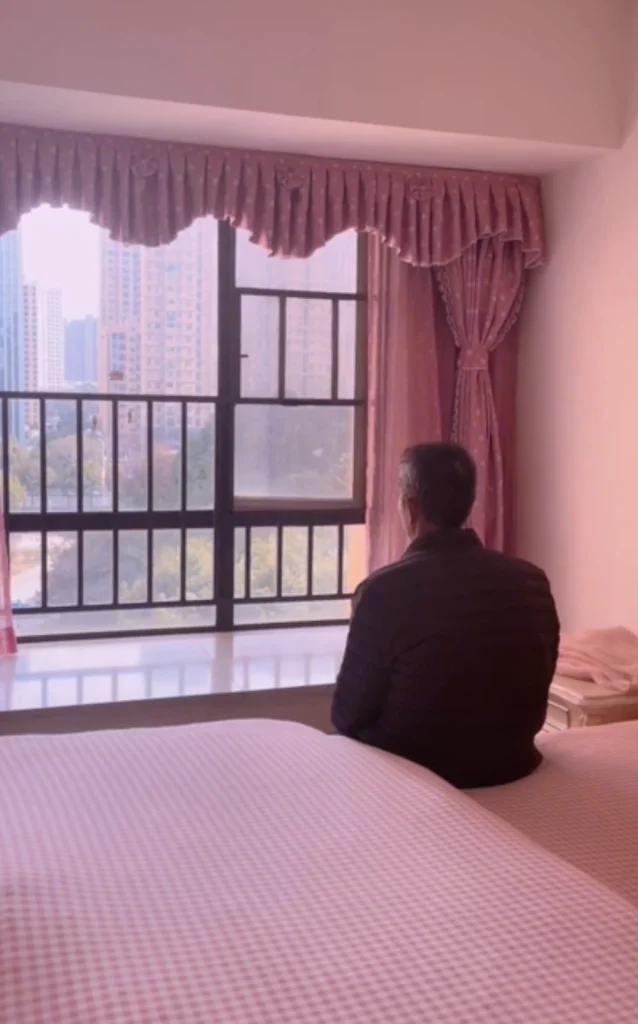
According to the woman’s viral post, the daily routine is clockwork. Her father-in-law walks into her room, sits by the window, sips his tea, and gazes outside.
The reason for this intrusion is surprisingly simple. The daughter-in-law’s room offers the best vantage point of the public square below the apartment complex. From this specific window, one can see groups of people dancing, exercising, and socializing—a pastime the father-in-law deeply enjoys watching.
“He thinks it’s a refined hobby,” the woman explained. “He drinks his tea, admires the view, and watches the square dancing. He doesn’t see anything wrong with doing this in my bedroom.”
Despite the innocence of his actions, the frequency is overwhelming. Eight times a day is a significant amount of traffic in what should be a private sanctuary. The daughter-in-law admits to feeling awkward and stifled, unable to relax in her own space until he leaves.
The Cultural Conflict: Why Not Just Lock the Door?
To a Western audience, the solution might seem obvious: lock the door or tell him to stop. However, the situation is nuanced by deep-rooted cultural values of Filial Piety (respect for parents/elders).
The woman explained that locking the door is not a viable option. In her household, closing a door against a parent could be interpreted as an act of rebellion or disrespect.
- The Fear of Misunderstanding: “If I lock the door, he will think I am being disobedient or hiding something,” she shared. “He just wants to watch the view. If I deny him that small joy, it creates a massive conflict.”
- The Burden of Harmony: Having lived together peacefully for eight years, she fears that asserting her boundaries too aggressively could shatter the family harmony.

Public Reaction: A Divided Internet
The story has sparked a fierce debate online, with netizens split between defending the woman’s right to privacy and sympathizing with the lonely father-in-law.
Team Privacy
Many commenters felt the father-in-law was crossing a line.
- “Regardless of the view, a daughter-in-law’s bedroom is a private space. Entering it eight times a day is excessive.”
- “This is a lack of boundaries. Elders need to learn that their children are adults who need space.”
Team Empathy
Others felt the issue was being blown out of proportion.
- “He is an old man who just wants to watch people dance. It’s a harmless hobby. Why be so harsh?”
- “If he isn’t going through your things and just sits by the window, maybe just let him be. He is family.”
Analysis: Navigating Boundaries in Multigenerational Homes
This story serves as a perfect case study for the friction that often occurs in multigenerational households. It is rarely about “right vs. wrong” and more about “comfort vs. custom.”
How to Handle Similar Situations:
- Indirect Communication: In cultures where direct confrontation is rude, using a mediator (like the husband) is crucial. The husband should be the one to gently explain to his father that his wife needs privacy for changing, working, or resting.
- Create Alternatives: Could a chair be set up on a balcony or in the living room? If the view is the only draw, perhaps the family could rearrange the layout so the “viewing spot” isn’t in a private bedroom.
- Scheduled “Visiting Hours”: Compromise is key. Perhaps the father-in-law can use the room for one hour in the morning and one in the evening, rather than wandering in and out all day.

Conclusion
The story of the tea-drinking father-in-law is a humorous yet poignant reminder of the complexities of family life. While his actions are innocent, the impact on the daughter-in-law’s mental well-being is real.
For this family, and many others like them, the answer lies not in locking doors, but in opening conversations. Respect goes both ways—respect for the elders’ happiness, and respect for the younger generation’s privacy.

FAQ
Q: Is this behavior common in Asian households?
A: Multigenerational living is common, and while entering bedrooms without knocking can happen, entering 8 times a day is considered extreme even by traditional standards.
Q: Why didn’t the husband intervene?
A: The article notes the daughter-in-law felt “helpless,” implying that previous attempts to talk may have failed, or the husband is hesitant to offend his father.
Q: What is the “Square Dancing” mentioned?
A: In China, “Guangchang Wu” (square dancing) is a very popular exercise routine for seniors, performed in public plazas. It is a major social event for the elderly.
Source: Original story adapted from reports on VietGiaiTri and social media discussions.