
Author: Khoon Daily
Date: December 19, 2025
Reading Time: 5 Minutes
Introduction: The Universal Betrayal of “It Won’t Be Hard”
It is a scenario as old as the education system itself. A teacher stands before the class a few days before the midterm, smiling reassuringly. “Don’t worry,” they say with a calm demeanor that borders on suspicious. “The exam will be easy. Just review what we covered.”
Students, filled with a fragile sense of hope, walk into the exam hall believing they are prepared. Then, the moment of truth arrives. They flip over the paper, read the first question, and their souls leave their bodies.
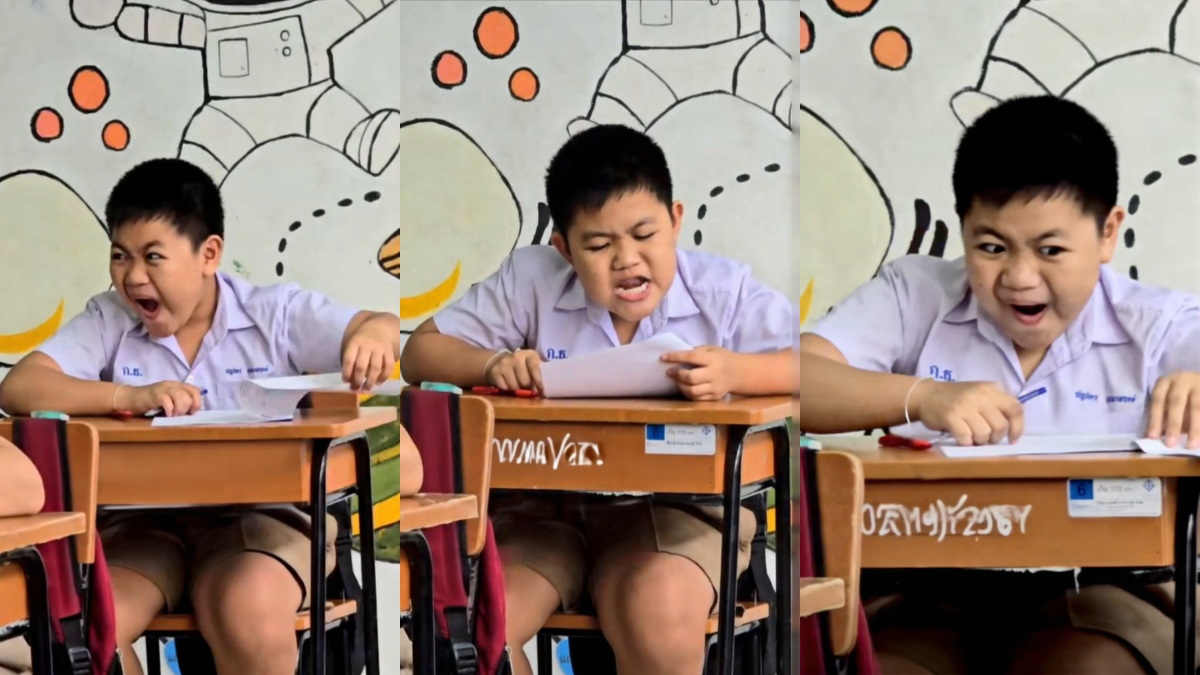
This exact moment of realization—the transition from confidence to sheer despair—was recently captured in a viral video that has taken social media by storm. A TikTok video posted by a Thai teacher has resonated with millions, perfectly encapsulating the hilarious, silent scream of students facing a “harder than expected” math exam.

The Viral Moment: “Faces That Say Everything”
The viral sensation originated from the TikTok account @pohnwasan_knot, a teacher who decided to document the atmosphere during a recent math midterm examination. The premise was simple yet effective. The teacher had arguably told the students the classic line: “The math exam is easy.”
However, the video footage tells a starkly different story.
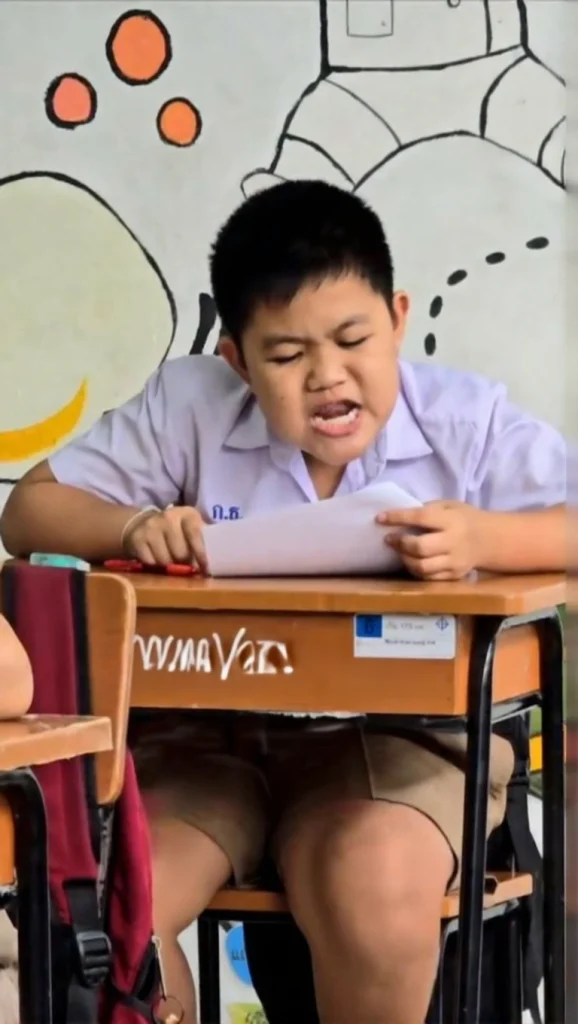
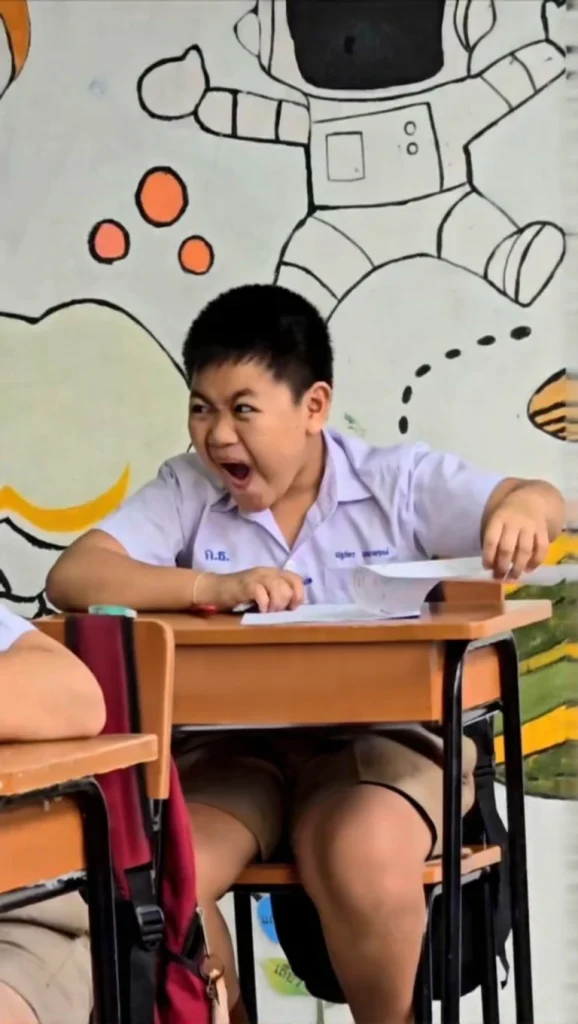
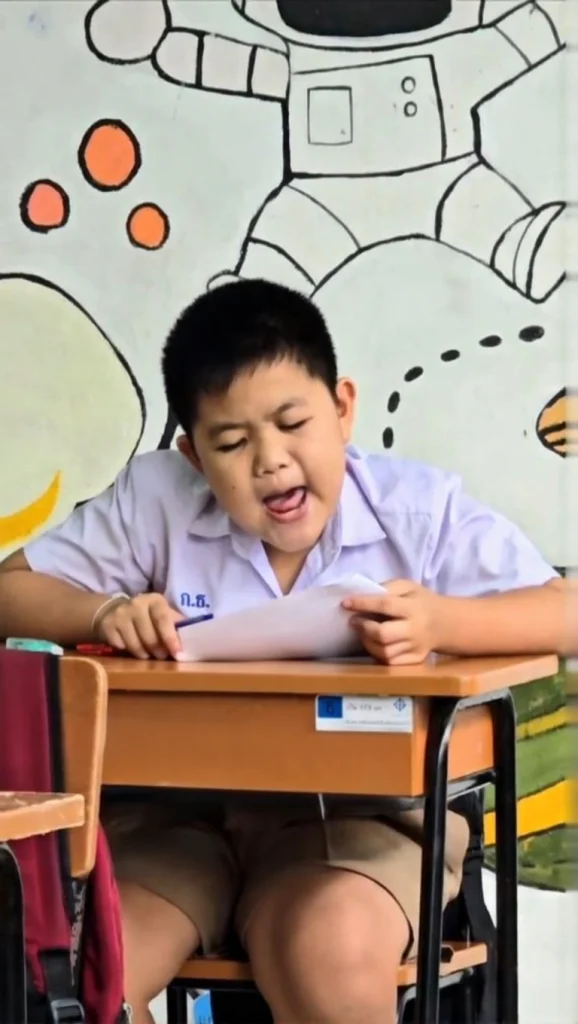
As the camera pans across the classroom, it captures the students in the rawest moments of their academic struggle. We don’t hear them speaking, but their facial expressions scream volumes. Some students are frozen, staring at the paper as if it is written in an alien language. Others have their hands on their heads in a universal gesture of “What have I done to deserve this?”
The teacher captioned the clip with a playful jab: “A simple math exam, guys. Is there anything you want to tell the teacher?”
The contrast between the teacher’s caption and the students’ traumatized faces is comedy gold. It highlights the vast disconnect between a teacher’s definition of “simple” and a student’s reality.
Social Media Erupts: 1.7 Million Views and Counting
In the digital age, classroom moments often transcend the school walls, and this clip is a prime example. As of late 2024, the video has garnered over 1.7 million views and more than 102,000 likes, proving that the trauma of math exams is a universal language.
The comment section became a therapy group for former and current students, all bonding over the shared experience. Netizens flooded the post with hilarious observations that added another layer of humor to the content.
Top Community Reactions
- “Just reading the question feels like opening ‘Curse Mode’.”
One user pointed out that the students weren’t just thinking; they were likely mentally chanting spells against the setter of the paper. - “Are they reading the questions or cursing the teacher?”
The intense focus on the students’ faces led many to wonder if the furrowed brows were due to calculation efforts or silent frustration directed at the front of the room. - “The face and actions tell every feeling from the heart.”
No words were needed. The body language—slumped shoulders, widened eyes, and deep sighs—communicated the difficulty of the exam better than any grade could.

Why This Resonates: The Psychology of the “Hard Exam”
Why did this specific video go viral? It touches on a psychological phenomenon known as Shared Academic Trauma. Almost every adult has a memory of sitting in a quiet hall, hearing the clock tick, and realizing they do not know the answer to Question 1.
The Teacher-Student Trust Dynamic
When teachers claim an exam is “easy,” they often mean it is fundamentally simple if one understands the core concepts. However, to a student who has crammed memorized formulas the night before, a slight twist in the question wording can make it appear impossible. This video validates the feelings of students everywhere who have felt “betrayed” by a teacher’s optimism.
Humor as a Coping Mechanism
By recording and sharing this (likely with student consent/participation in the joke), the teacher transforms a high-stress situation into a moment of levity. It humanizes the classroom experience. Instead of the exam being a scary, isolated event, it becomes a shared joke between the educator and the learners.
Conclusion: A Lesson in Resilience (and Humor)
While the students in the video might have suffered through that hour of mathematics, they inadvertently became stars of a viral moment that brought laughter to millions. The exam scores may eventually be forgotten, but the memory of that “easy” exam that left the whole class stunned will likely be a cherished memory of their school days.
To the students: We hope you passed.
To the teacher: We salute your sense of humor (but maybe go easy on them for the finals!).
Source: This article is based on viral content reported by Sanook Campus and originally posted by TikTok user @pohnwasan_knot.